June 30th marks the midpoint of the year in Japan, a date marked by a Shinto purification ritual called Nagoshi no Harae (also written 名越の祓).
The ritual is held to cleanse away the impurities accumulated over the first half of the year and to pray for good health through the months ahead. It takes place at shrines across the country.
The Origin of Chinowa Kuguri
The ritual’s most recognizable custom is chinowa kuguri, passing through a large ring woven from chigaya grass.
Its origin traces back to Japanese mythology.
According to the legend, the god Susanoo-no-Mikoto sought lodging on a journey. A poor man named Somin Shorai welcomed him warmly, while his wealthier brother turned him away.
In gratitude, Susanoo told Somin Shorai to wear a ring of chigaya grass around his waist. His descendants who followed this teaching were said to be spared from epidemics.
This story is the origin of the belief that passing through the ring purifies misfortune and impurity.
Hitogata: Paper Effigies That Carry Away Misfortune
At some shrines, the ritual also involves paper cutouts shaped like a human figure, called hitogata.
Participants write their name on the figure, rub it against their body, and breathe on it, transferring half a year’s worth of misfortune onto the paper.
The hitogata are then offered at the shrine, set afloat on a river, or burned, as a prayer for protection from harm.
Minazuki: The Seasonal Sweet of Nagoshi no Harae
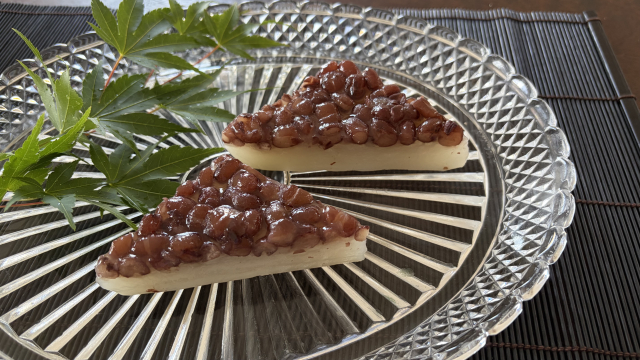
A traditional wagashi called minazuki is eaten around this time of year, especially in Kyoto.
It is a triangular sweet made of white u