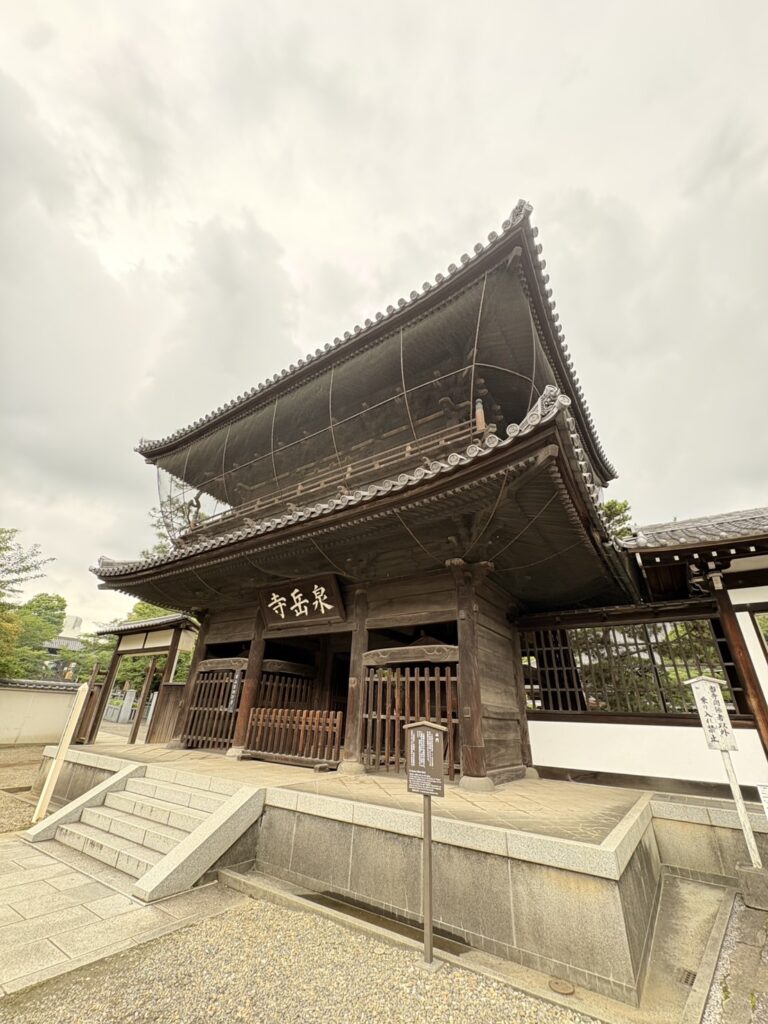
Visiting Sengakuji Temple
After walking through the Takanawa area, I visited Sengakuji Temple.
It’s well known as the resting place of the 47 Ronin, but what I found there was more than history. It was a living cultural experience.
The Original Meaning of Goshuin
Today, goshuin (temple seals) are often collected as souvenirs when visiting shrines and temples.
Originally, however, they were given as proof that a visitor had offered a hand-copied sutra.
At Sengakuji, visitors can experience this original tradition by copying a sutra and receiving a goshuin in return.
Trying Sutra Copying
Visitors can choose from several different sutras to copy.
Some are short, like the phrase “form is emptiness,” while others are much longer.
I ended up choosing the longest one available (a decision I laughed about afterward).
The quiet time spent carefully writing each character turned out to be a valuable experience in itself.
Preserving Tradition While Staying Accessible
What struck me was how the temple preserves the traditional format of this practice while still making it approachable for first-time visitors.
This reminded me of tea ceremony in many ways.
Keeping the essence intact, while adapting how it’s shared with others.
International Visitors at Sengakuji
I was surprised by how many international visitors were at the temple grounds.
Many weren’t simply sightseeing. They seemed genuinely interested in the story of the 47 Ronin itself.
Some mentioned discovering the story through films like “47 Ronin.”
It made me realize how culture can travel across borders through storytelling.
Final Thoughts
Kabuki, rakugo, tea ceremony, sutra copying.
Japanese culture isn’t something confined to the past. It continues to evolve through people’s engagement with it today.
At GreenTeaTokyo, we aim to bring this same spirit of Japanese culture to life through hands-on experiences.
If you’re interested in a matcha tea ceremony experience, please take a look below.
On-site Matcha Tea Ceremony Experience