The other day, I took part in a Noh experience program at a Noh theater.
I got to try on an actual Noh mask, learn how to wear the traditional costume, and even practice a bit of chanting (utai). It was a rare chance to feel a little closer to the world of Noh.
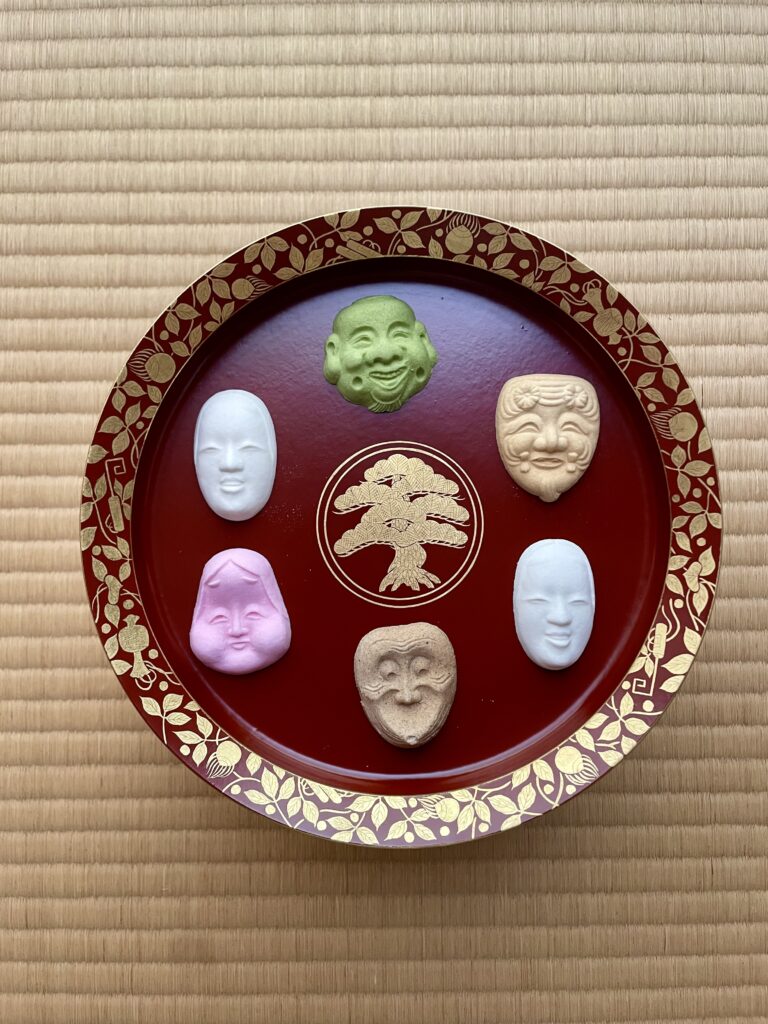
And on my way out, I found something unexpected at the theater: a wagashi (Japanese sweet) shaped like a Noh mask.
Each one had a slightly different expression, and they were simply adorable. But what really struck me wasn’t just the shape.
The mold was carved by a Noh mask maker
It turns out the mold used to make this sweet was carved by an actual Noh mask maker, someone who carves real Noh masks for the stage.
In other words: a craftsman who carves Noh masks also carved the mold for a sweet shaped like one. Once you know that, this little sweet suddenly feels a lot more special, doesn’t it?
The wooden mold used to shape wagashi, known as kashigata, is far more than a simple tool. Dry sweets like rakugan are formed by pressing ingredients into these molds. Creating such delicate detail requires real craftsmanship, and the molds themselves are sometimes valued as works of craft in their own right.
So within this small sweet, two Japanese traditions quietly overlap: the art of carving a Noh mask, and the art of making wagashi.
Comparing it to a real Noh mask
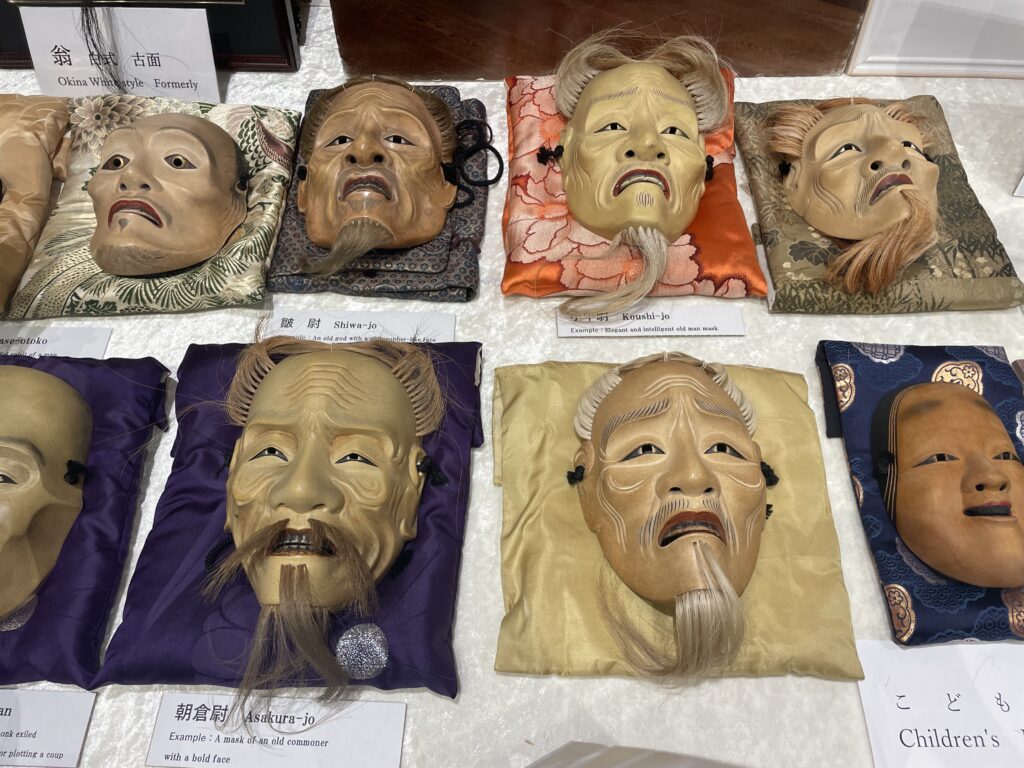
Since I had also seen an actual Noh mask on display that day, I placed the sweet next to it to compare.
Looking closely, the eyes, mouth, and overall contours really do carry that distinct “Noh mask” character.
Of course the size and material are completely different, but having just seen a real mask up close, I found myself smiling and thinking, “So this is how that expression became a sweet.”
What struck me most was this: something that would eventually be eaten and disappear still required real craftsmanship to shape. At first glance, it’s simply a cute souvenir. But once you know the story behind it, it looks completely different.
Traditional culture shows up in unexpected places
When we think of Noh masks, we usually picture them only on stage.
But seeing this little sweet made me realize that traditional culture actually connects to far more places than we expect.
A Noh mask’s form becomes a wagashi. A Noh mask maker carves the mold for it. And we get to enjoy it simply as a sweet. Somehow, that made traditional culture feel just a little closer to everyday life.
During this Noh experience, I had the rare chance to actually wear a Noh mask. And on the way home, I got to bring back a sweet shaped after that very mask.
To see it, to touch it, to taste it. It was a day where I got to experience Japanese culture from several different angles, and I enjoyed every bit of it.
In summary
- The mold for this Noh mask sweet was carved by an actual Noh mask maker
- Kashigata (wagashi molds) require skilled craftsmanship and can themselves be valued as works of craft
- Two traditional crafts, Noh masks and wagashi, quietly overlap in one small sweet
At GreenTeaTokyo, we also offer a matcha tea ceremony experience where you can see, touch, and taste Japanese tradition firsthand.
We also provide on-site tea ceremony services for hotels and events, so if you’re interested, please take a look.
Learn more ▶︎On-Site Tea Ceremony