Experiencing Noh Theatre|Trying On a Noh Mask, Kimono, and Chanting
I recently took part in a Noh theatre experience program held at a Noh stage in Tokyo.
I work with tea ceremony on a daily basis, so I have always been interested in traditional Japanese culture. But when it came to Noh, there was so much I didn’t actually know.
I could vaguely picture a Noh mask or costume, but I had no real sense of how a performance actually comes together.
That curiosity is what brought me to this program.
Learning About Noh Through Video
The program lasted about four hours in total.
The first part was mostly spent watching videos about Noh, and honestly, around three of the four hours were video-based, so it was a fairly thorough introduction.
The videos covered the history of Noh, its repertoire, and the movements of the performers — details that are hard to grasp from simply watching a performance.
That said, the part I enjoyed most was the hands-on portion in the second half.
That’s where things shifted from watching to actually doing.
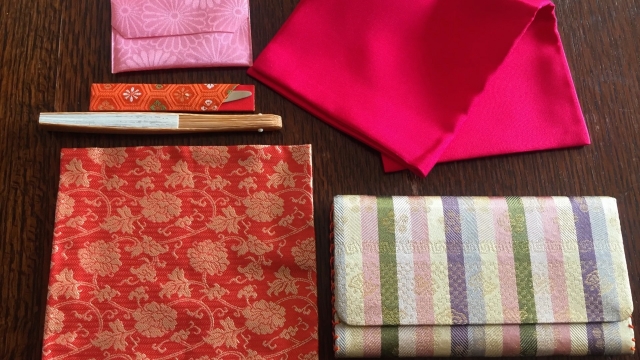
Watching a Noh Costume Being Put On
One of the most interesting parts was the Noh costume.
On stage, I watched up close as a performer’s costume was put on, step by step.
I’m used to handling kimono, but a Noh costume is a completely different thing.
On stage it looks effortless, but in reality there are many steps involved, each designed to make the costume look beautiful once the performer starts moving.
It made me realize that traditional performing arts carry just as much craftsmanship in the parts you don’t see as in the parts you do.
Giving Chanting (Utai) a Try
I also had the chance to practice utai, the chanting used in Noh.
The distinctive vocalization and melodic phrasing turned out to be far harder than I expected.
It uses a completely different way of using your voice than everyday speech, so even trying to imitate it didn’t come easily.
Still, actually voicing it myself gave me a small sense of something that watching the video alone never could.
The Noh Mask I Had Been Looking Forward To
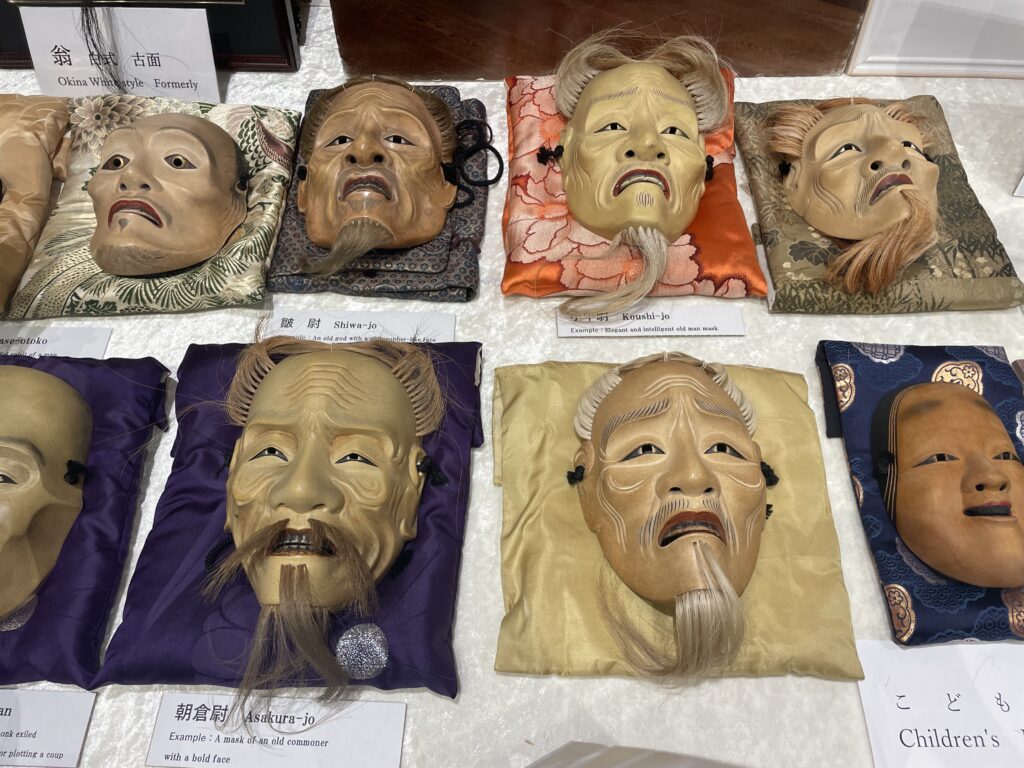
The part I was most looking forward to was the Noh mask.
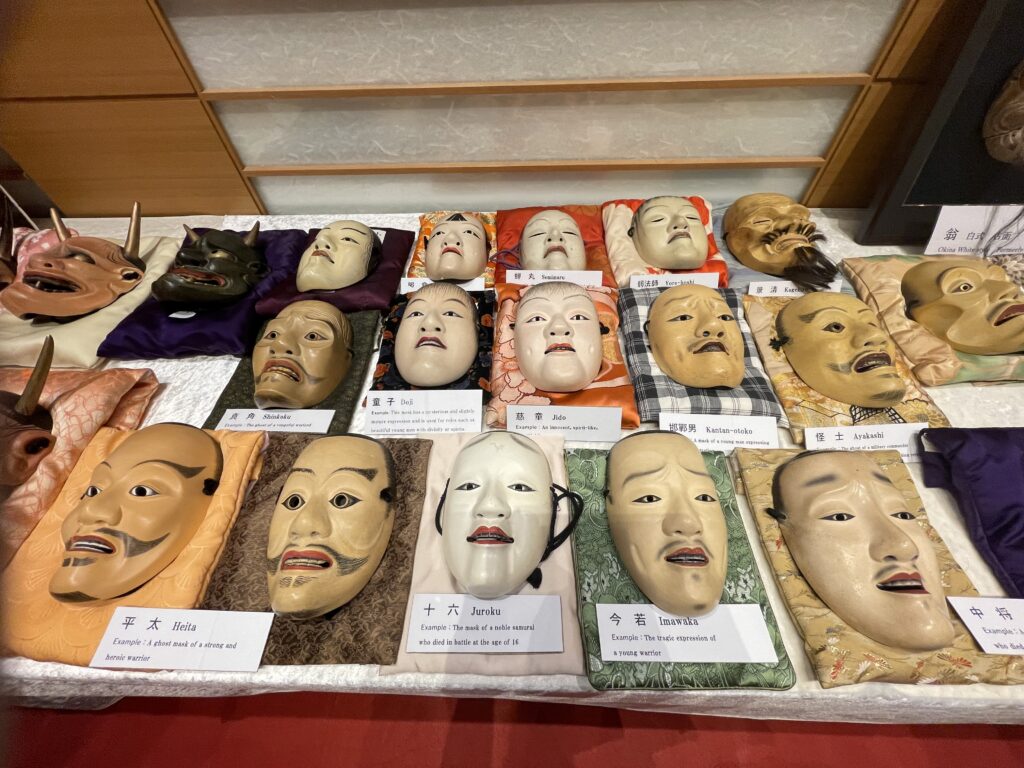
I was shown a number of different masks up close.
Lined up together, each one has a completely different expression.
At first glance a Noh mask looks expressionless, but depending on the angle and the way light falls on it, the same mask can look like it’s smiling or grieving — a detail I found genuinely fascinating.
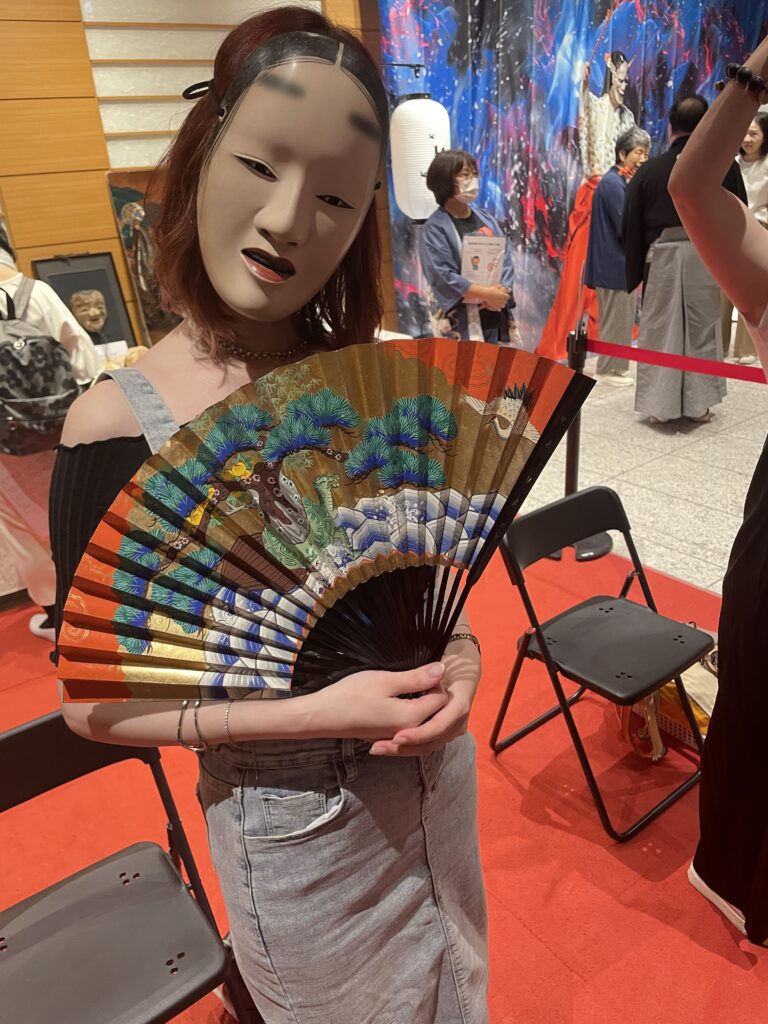
When I actually put a mask on, I was surprised by how limited the field of vision becomes.
It made me understand, physically, that performers move across the stage and execute precise choreography within that same restricted view.
What You Can’t Understand Just by Watching
What struck me most from this experience is that traditional culture becomes far more real the moment you actually try it yourself.
Watching videos teaches you a lot, but watching the costume being put on, voicing the chant, and putting on the mask turned something that had always felt like “an old, distant art form” into something I experienced firsthand.
This connects closely to tea ceremony as well.
There is so much about tea ceremony that you simply can’t grasp from photos or videos — until you whisk the matcha yourself, or hold the tea bowl in your own hands.
Moving from simply “knowing” to actually “experiencing” is what makes Japanese culture come alive.
This Noh experience reminded me of that once again.
If you’re interested in traditional Japanese culture but feel it might be a bit intimidating to approach, experiences like this are a great place to start.
There’s no need to overthink it — simply trying it is often what reveals why it’s so compelling.
At GreenTeaTokyo, we offer on-site matcha tea ceremony experiences that let you engage with Japanese culture in a similarly hands-on way, wherever you are.
If you’re interested, please take a look at the page below.
Learn more about our on-site matcha experience