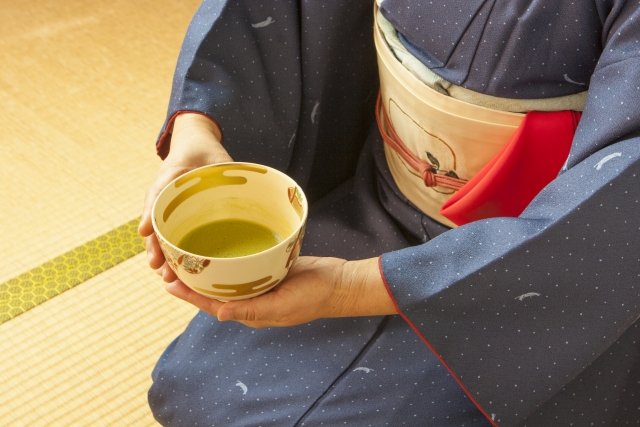
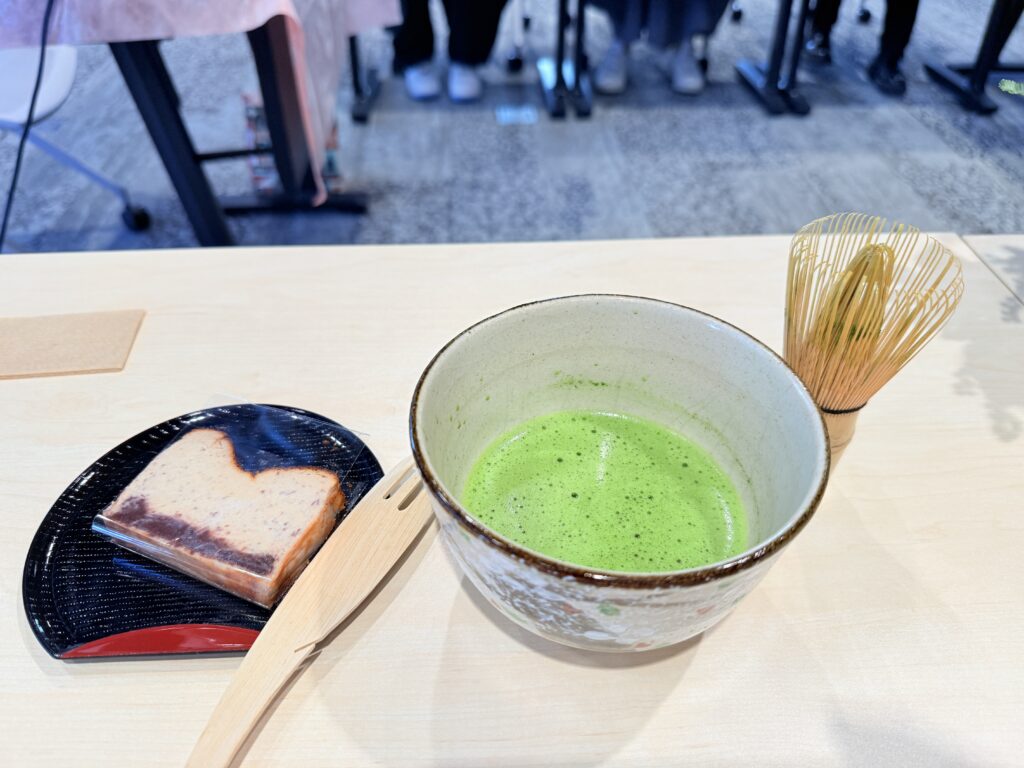
If you’ve ever attended a Japanese tea ceremony — or watched one — you may have noticed a quiet, deliberate moment: before drinking, the guest slowly rotates the tea bowl in their hands.
It looks simple. But this single gesture carries over 800 years of history, philosophy, and human feeling.
My name is Ishii, and I’ve been practicing and teaching tea ceremony for many years. This is one of the questions I’m asked most often, and it’s one of my favorites to answer.
The Reason You Turn the Tea Bowl
1. Respect for the host’s hospitality
When a host prepares a bowl of matcha, they place the most beautiful side of the tea bowl — the “front” — facing the guest. It’s a quiet act of care and welcome.
The guest, in response, turns the bowl before drinking so that the beautiful front faces away from their lips. The message is: I am not worthy to drink from the finest part of this bowl you’ve offered me.
It’s a conversation without words — gratitude expressed through movement.
2. Practical origins
There are also practical reasons rooted in history:
- To keep the drinking edge clean and unscratched
- To protect the most prized surface of the bowl from wear
- To distribute the warmth of the tea evenly in hand
In tea ceremony, the beautiful and the practical are never separate. They are always one.
Where This Gesture Comes From
The Muromachi Period (1333–1573)
The tea ceremony as we know it began taking shape during the Muromachi period, deeply influenced by Zen Buddhism. The act of turning the bowl became associated with the Zen concept of “no-self” (無我, muga) — letting go of ego, of hierarchy, of the desire to receive only the best.
In the tea room, host and guest meet as equals. The turning of the bowl was a physical expression of that equality.
The Age of the Samurai
As tea ceremony spread through samurai culture during the Sengoku period (the age of warring states), the gesture took on additional meaning. To turn the bowl was to show openness and trust — to make yourself momentarily vulnerable before another person.
For warriors whose lives were defined by conflict and status, the tea room was the one place where all of that fell away.
How to Turn the Tea Bowl: The Basic Movement
If you’re trying this for the first time, here’s the simple form:
- Receive the tea bowl with both hands — left hand supporting the base, right hand steadying the side
- Place the bowl on your palm
- Rotate the bowl clockwise, two small turns (roughly 90 degrees in total), so the front faces away from you
- Lift the bowl and drink
- After drinking, wipe the rim gently and rotate the bowl back so the front faces the host again before setting it down
There’s no need to rush. In fact, the slower and more deliberate your movement, the more it communicates.
Why This Still Matters Today
In a world of fast communication and constant distraction, the tea ceremony offers something rare: a moment of complete presence with another person.
The act of turning the bowl is a small but powerful reminder — that thoughtfulness toward others can be expressed not just in words, but in the way we move, the way we receive, the way we hold something beautiful.
Many of the corporate clients and international guests we work with tell us that this is the moment that stays with them long after the experience ends.
Experience It for Yourself
Understanding the tea ceremony is one thing. Feeling the weight of the bowl in your hands, making the turn yourself — that’s something else entirely.
At GreenTeaTokyo, we bring the tea ceremony directly to you — to your office, hotel, or event venue anywhere in Tokyo. English-speaking instructors are available, and no prior experience is needed.
▶ Learn more about our on-site matcha experience