Who Was Oda Urakusai? The Tea Master Who Was Oda Nobunaga’s Brother
You may have heard of Yurakucho — one of Tokyo’s most familiar neighborhoods. But do you know where the name comes from?
Yurakucho takes its name from Oda Urakusai, a feudal lord who once had his Edo residence on that very land. A devoted tea master who survived the chaos of the Sengoku period, Urakusai left a cultural legacy that endures to this day.
Born as Oda Nobunaga’s Younger Brother
Urakusai’s given name was Oda Nagamasu, born in 1547 as the eleventh son of the warlord Oda Nobuhide — and the younger brother of the legendary Oda Nobunaga, thirteen years his senior.
Where Nobunaga was fierce and ambitious, Nagamasu was quiet and studious, drawn more to the arts than the battlefield.
When the Honnoji Incident of 1582 claimed Nobunaga’s life, Nagamasu managed to escape — a decision that was mocked by some at the time, but ultimately allowed him to carry the Oda name forward.
Studying Under Sen no Rikyu
After the fall of Nobunaga, Urakusai entered the service of Toyotomi Hideyoshi, where he studied tea ceremony under the great master Sen no Rikyu.
He received a formal transmission of Rikyu’s teachings in Hideyoshi’s presence — an honor reserved for only the most distinguished students.
At the heart of Urakusai’s approach to tea was a deceptively simple idea: the purpose of tea is to make the guest feel welcome above all else.
This was not a rigid, rule-bound practice, but one centered on genuine hospitality — a spirit that feels remarkably modern.
Founder of Two Tea Traditions
After fighting on the winning side at the Battle of Sekigahara in 1600, Urakusai was granted 30,000 koku in Yamato Province.
As he entered his later years, he chose to retire from politics and devote himself entirely to tea.
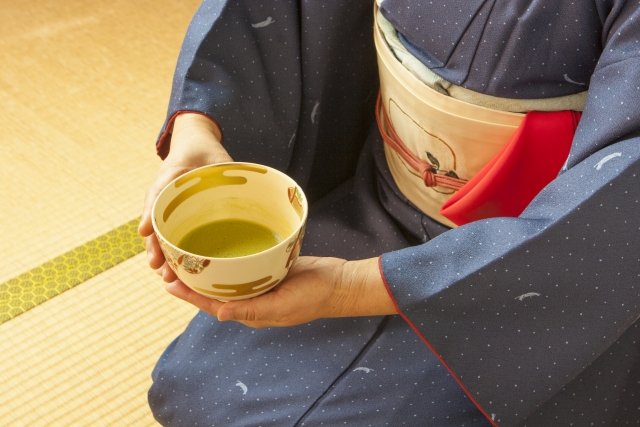
The traditions he established survive to this day in two distinct schools: the Uraku school (抹茶, matcha tea ceremony) and the Oda school of sencha (煎茶道, steeped green tea ceremony).
A warlord’s legacy, still practiced four centuries later.
Joan — A National Treasure Tea Room
Urakusai’s most enduring gift to Japanese culture is the tea room “Joan” (如庵), built in 1618 at Shoden-in within Kyoto’s Kenninji Temple.
Joan is celebrated for its inventive design details: walls lined with pages from old almanacs, and the distinctive “Uraku window” — a pattern of finely arranged bamboo strips that filters light in a uniquely gentle way.
The tea room was later relocated to Urakuen Garden in Inuyama, Aichi Prefecture, where it stands today as a National Treasure of Japan.
It represents the fullest expression of Urakusai’s philosophy: a space designed not for austerity, but for the comfort and delight of the guest.
A Life Well Lived — 75 Years Across Three Eras
Urakusai served under all three of Japan’s great unifiers — Nobunaga, Hideyoshi, and Tokugawa Ieyasu — and passed away in 1621 at the age of 75.
In an age defined by war, he chose culture. In an age of rigid hierarchy, he chose hospitality.
His life is a quiet reminder that the way we welcome others can itself be a form of mastery.
Experience the Spirit of Japanese Tea Ceremony
The same spirit of hospitality that Urakusai championed — welcoming guests with sincerity and care — is at the heart of every GreenTeaTokyo experience.
We offer on-site matcha tea ceremony experiences for corporate events, hotels, weddings, and more, delivered anywhere in Tokyo.
▶ Learn more about our on-site tea ceremony experience