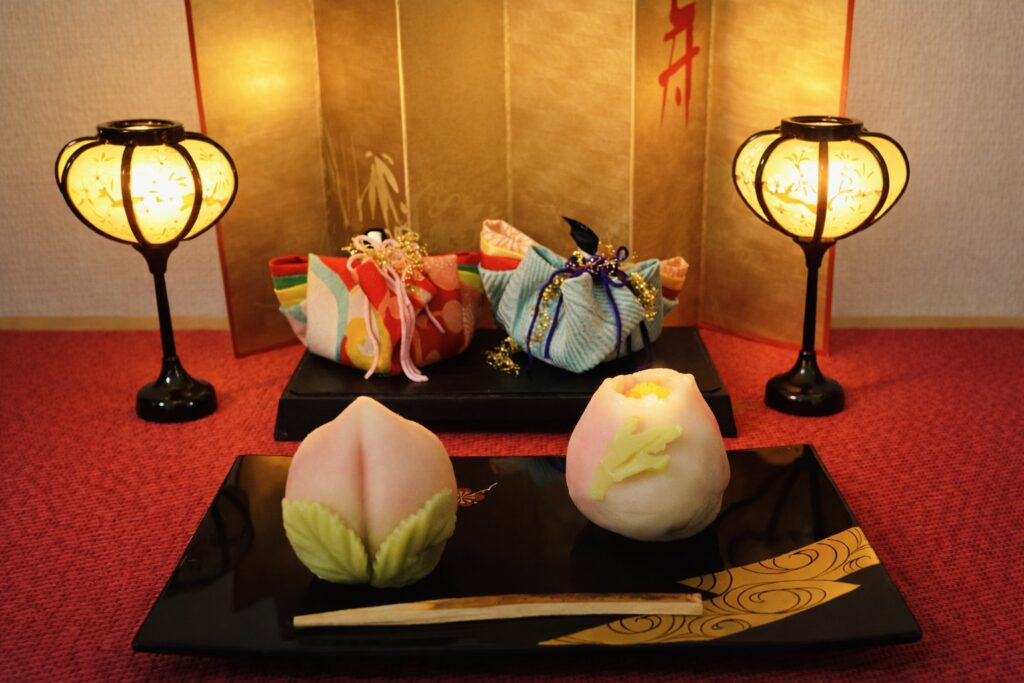
March 3rd is Hinamatsuri — also known as Momo no Sekku, or the “Festival of Peaches.”
But why peaches? It’s not simply because they bloom in early spring. In both ancient Japan and China, the peach was believed to be a sacred fruit with the power to ward off evil spirits.
Why Is the Peach a Symbol of Protection?
In ancient Chinese thought, the peach tree was considered to have the power to repel evil. This belief made its way to Japan and even found its place in Japanese mythology.
In the Kojiki — Japan’s oldest chronicle — the god Izanagi escapes from the underworld and throws peaches at the pursuing spirits to drive them away. The peach, in other words, was a weapon against darkness.
Is That Why Momotaro Was Born from a Peach?
In the beloved folktale Momotaro (Peach Boy), a boy born from a giant peach goes on to defeat a band of demons. This is likely no coincidence.
“Because he was born from a peach — the ultimate symbol of protection — he alone had the power to conquer evil.” This is a well-known interpretation in Japanese folklore studies.
- Peach = purification, protection from evil
- Demons (Oni) = misfortune, impurity
Seen through this lens, the story of Momotaro takes on a whole new depth.
Hinamatsuri Was Originally a Purification Ritual
The origins of Hinamatsuri lie in a ritual called Nagashi-bina — the practice of placing handmade dolls on a boat or leaf and setting them adrift in a river. The idea was to transfer one’s impurities and misfortunes onto the doll, and let the water carry them away.
At its heart, Hinamatsuri was always a celebration of children’s health and a prayer for protection from harm. Paired with the peach — long regarded as a guardian against evil — it became known as Momo no Sekku, the Festival of Peaches.
A Gentle Day of Protection
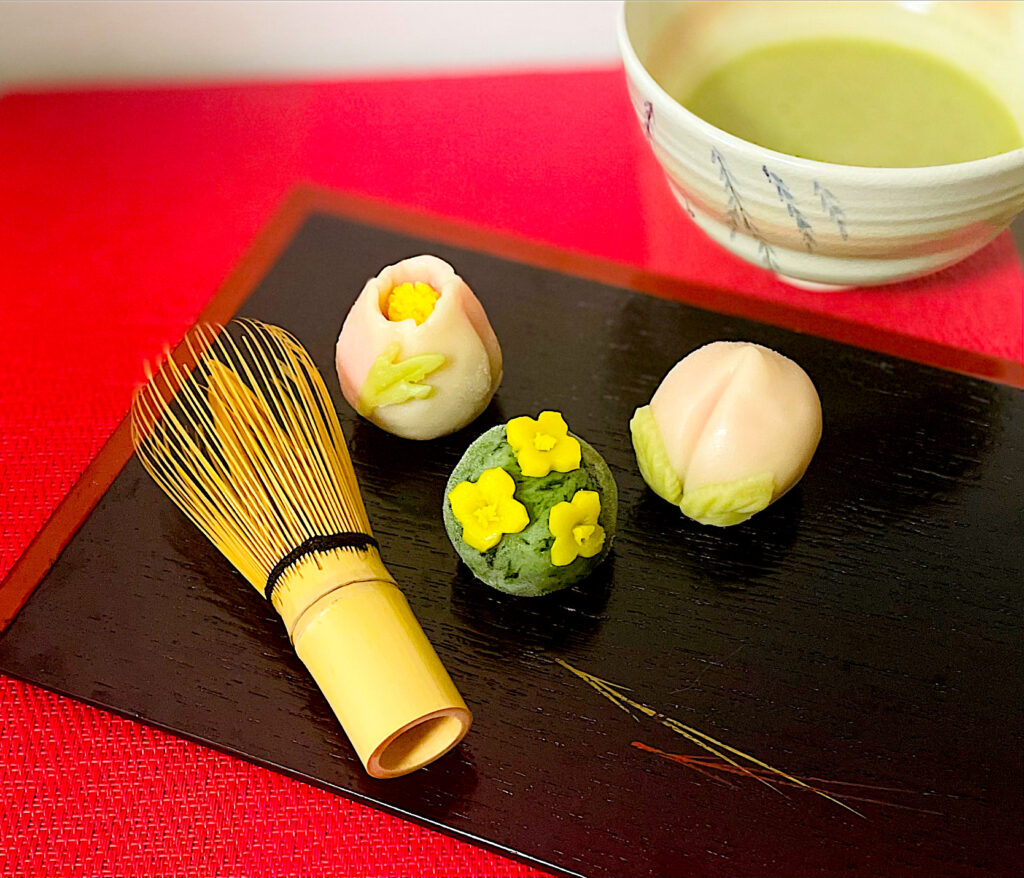
Peach blossoms arrive just before cherry blossoms, quietly announcing the arrival of spring. They are delicate, yet dignified.
March 3rd is a day to admire beautifully displayed Hina dolls — and to quietly wish away whatever shadows the new year may hold. It doesn’t require grand gestures. Like the soft bloom of a peach flower, it’s a day to simply feel protected.
Experience Japanese Culture for Yourself
Japanese traditions like Hinamatsuri are rich with meaning, history, and beauty. If you’d like to experience that culture firsthand, we’d love to welcome you.
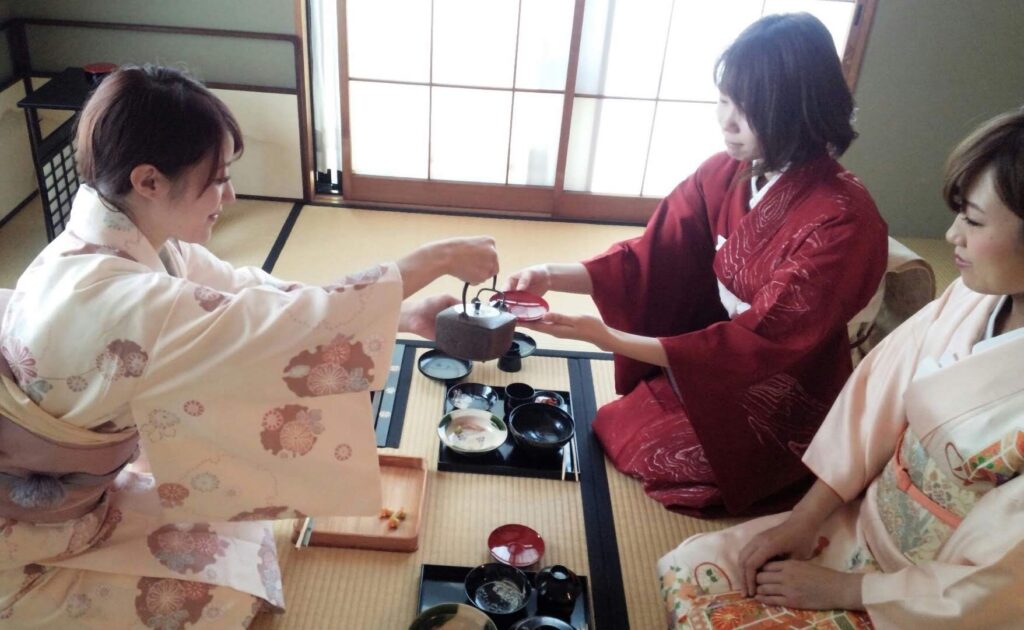
GreenTeaTokyo offers private, on-site tea ceremony experiences — perfect for Hinamatsuri celebrations, team events, or simply a meaningful cultural experience with friends and family.
👉 View Tea Ceremony Experience Details & Pricing